
Power, Policy, and Progress
(formerly “History to Shape History”)
Forecast and shape the future based on lessons from the past.
Designed for students interested in economics, politics, philosophy, debate, and law!
Online program exploring how you can use the lessons of history, economics, politics, philosophy, and law to make a positive impact on humanity’s future.
Dates: 12 October to 22 November
Who: Smart, curious, and ambitiously altruistic students aged 14-19 who haven’t yet started university
Cost: Choice of tiers based on ability to pay (including fully free if needed!)
Top participants receive custom mentorship, referrals to selective next-steps, access to funding, and ongoing support!
What you can expect

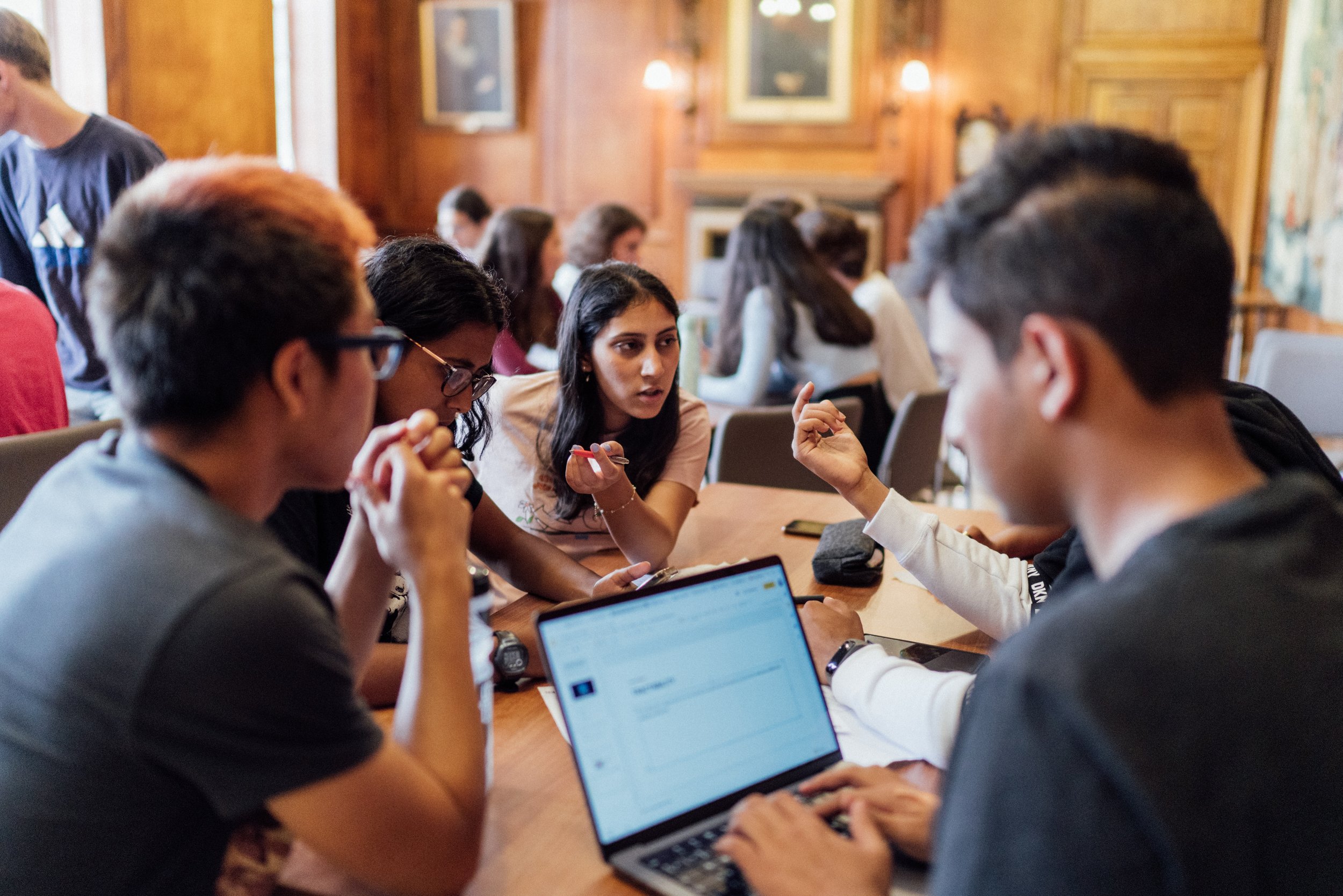
Facilitated discussion groups with a cohort of smart, curious students

Talks and Q&As with professionals using social sciences to tackle pressing problems

Mentorship and referrals to pursue follow-up projects

Support with applications and Oxbridge/Ivy interviews


97% of participants would recommend!
Surveyed at the end of our summer cohort, 97% of our 300+ Finalists ranked 7/10 or above on their likelihood to recommend this course; 35% said 10/10!
Plus, nearly 90% reported feeling more confident in their ability to make a positive impact after their course!
Course overview
-
Decoding the structural systems that drive societal change.
Not all data is equal; learn to optimize your information diet for strategic decision-making.
Example resources:
🎧 The Rest is History podcast: “The Lessons of History”
📚 Book by Richard J. Evans: In Defence of History
📝 Report by Jamie Harris: “What Can the Farmed Animal Movement Learn from History?”
-
Identifying pivotal moments in our past and future
Where should we actually steer it to?
Example resources:
🎧 Blog readout by Holden Karnofsky: “Summary of history (empowerment and well-being lens)”
📚 Book by William MacAskill: What We Owe the Future
🎥 Video by Rational Animations: “Can we make the future a million years from now go better?”
-
Preserving or shaping the future: quantity vs quality
Learning from past revolutionaries and technologies
Example resources:
🎧 Podcast by 80,000 Hours: How long did it take computers and electricity to have economy-wide effects?
📚 Book by Leslie Crutchfield: How Change Happens: Why Some Social Movements Succeed While Others Don’t
📝 Forum post by Jamie Harris: “Key Lessons From Social Movement History”
-
What are the most important questions in the subject?
Research with real results: EPQ, thesis, and beyond
Example resources:
🌐 Webpage by Effective Thesis: “Research topics we recommend” (can be filtered to history)
📝 Forum post by Center for Applied Rationality: What are the important problems of your field?
🎥 Workshop by Michael Aird: “Building a Theory of Change for Your Research”
-
Mapping out high-leverage degree and career pathways.
Considering careers that capitalise on your strengths
Example resources:
🎧 Readout of an article by 80,000 Hours: “How to find the right career for you”
📑 Directory by Leaf: “Different potentially impactful career pathways, organised by degree subjects”
📝 Article by Probably Good: “The SELF Framework” — a simple tool to help you assess a role’s potential for improving the world


Weekly structure
-
Dive deep into intriguing historical topics using our curated resources or your own research. Challenge your assumptions with thought-provoking new perspectives, organised on our online learning platform with interactive videos, engaging quizzes, and other activities.
-
Weekly discussion with a Leaf facilitator and small-group breakouts to develop your critical thinking in conversation with intelligent, interesting, like-minded teens.
We’ll do our best to find a slot that works around your other commitments!
-
Research and present your ideas and positions on the material of the week. Get feedback from peers and Leaf staff. Win prizes!
-
Meet professionals who studied history, politics, philosophy, or law and are using what they learned to change the world.
-
Share your own knowledge plus join sessions run by peers and alumni! Meet inspiring peers with shared interests; collaborate on projects; discover exciting new ideas.
-
Discord channel, paired 1:1s, and opportunities to get to know peers with different backgrounds but shared passions. Share opportunities or enthuse about your niche hobbies and interests.
Meet some staff and former speakers
Our Humanities course is supported by a wide range of experts, facilitators, and alumni:

Rutger Bregman
Bestselling author & historian
-
Rutger’s books Humankind (2020) and Utopia for Realists (2017) were both New York Times Bestsellers and have been Giving What We Can translated in more than 40 languages. They take a historical perspective on human nature. He’s a member of Giving What We Can and his TED talk on poverty has been viewed 1.6 million times. He has a Master’s Degree in history from Utrecht University.

Lara Thurnherr
Rhyme (history research consultancy)
-
Lara studied History and Public Law at the University of Bern. She is the founder of Rhyme, a history research consultancy focused on answering historical questions relevant to the challenges today of governing AI. She is also a Tech Diplomacy Affiliate at the Simon Institute for Longterm Governance, and recently worked on research for the grant-making foundation Open Philanthropy.

Waqar Zaidi
LUMS & Centre for Governance of AI
-
Waqar is an Associate Professor of History at Lahore University of Management Sciences and a Research Affiliate at GovAI. His research is focused on the history of technology and international relations in the twentieth century. His first book, on Aviation, Atomic Energy, and the Search for International Peace 1920-50, was published in 2021. He holds a BA in Physics from Oxford University, and an MSc and PhD in History of Science, Technology, and Medicine from Imperial College London.

Joe Mansour
Foreign Office (UK civil service)
-
Joe has a first class degree in history from Oxford University. He explored working directly with nonprofits tackling poverty or protecting democracy and human rights, but soon came to focus on a policy career. He has worked in 5 different UK government departments and is currently an Energy Diplomat at the Foreign, Commonwealth and Development Office.
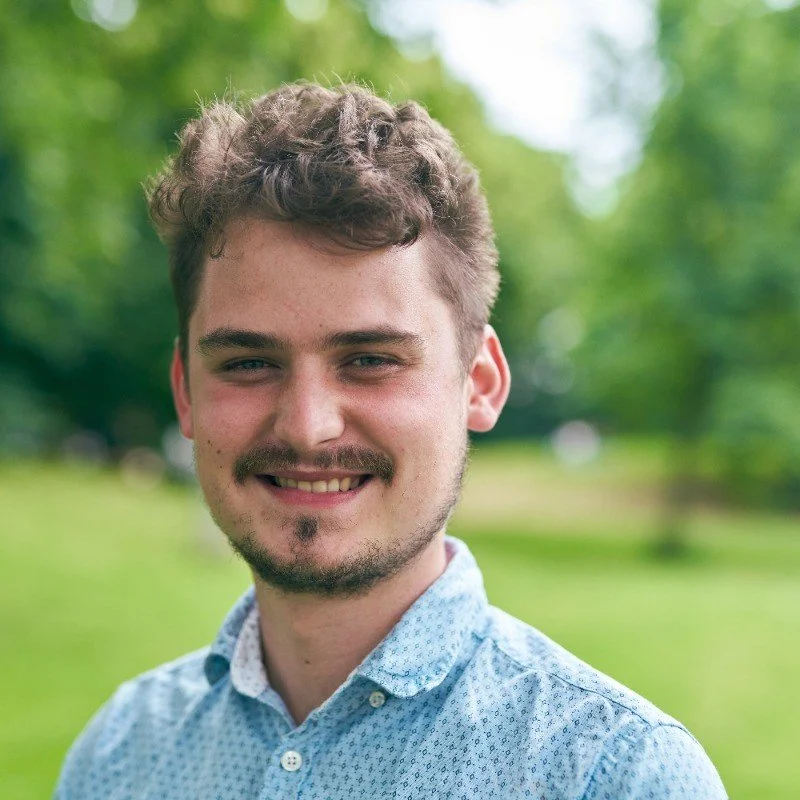
Matthew Chalmers
Humane League UK and political history YouTuber
-
Matthew Chalmers advocates for animal welfare, driving corporate and policy reforms for farmed animals. He uses his background in history and moral philosophy to inform current efforts for social change, including through is popular YouTube channel, The Liberator.

Natasha Misra
KCL PPE, Course Designer and Facilitator
-
Natasha is the course designer and facilitator of HSH. She is a PPE student at King’s College London and has been facilitating with Leaf for History and Maths since completing the History fellowship in 2023. She is the co-president of KCL’s EA Society, running events and fellowships for them, and has special interests in AI safety, feminism, and behavioural economics.
The opportunities don’t end after five weeks!
Learn more here about our referrals to top research programs, connection to experts and mentorship, support and funding for projects, and other ongoing Leaf alumni opportunities!

Alumni Perspectives
-
![Young man in a dark blazer and white dress shirt standing inside a large cathedral with high vaulted wooden ceilings, stained glass windows, and stone walls, with people in the background.]()
"Perhaps the most impactful program I’ve ever done, both philosophically and historically. I was able to ponder on how to maximise my impact for the future, having learnt of new methodologies to tackle issues which permeate society today. Moreover, I was able to discuss these topics in profound depth through weekly discussion calls with like-minded fellows. The fellowship is easily the best online opportunity I've encountered."
Ibrahim
-
![A young woman with long black hair wearing a dark blue shirt, smiling softly against a plain white background.]()
"I have been introduced to such a wide range of ideas that I had never even heard about before. I have always thought that I wanted to change things for the better but I am now interested in the idea of doing good that will sow seeds for the long term future. For example, I’m exploring how current AI developments are at risk of dismantling property rights and personal liberties in the future. I liked the aspects of independence that allowed me to explore things I was interested in and start up new conversations."
Jessica
-
![Portrait of a young African American man in a gray blazer and light purple shirt, wearing glasses, smiling against a neutral background.]()
"History to shape history has vastly exceeded my expectations. It opened up rabbit holes that I didn’t expect to be interested in, such as the history of totalitarian states compared to modern democracies. Exploring the value of research in improving the world was insightful; although I was working on a project before, I decided to change my question. It also got me thinking of other options outside History and led to exploring Economics as not just a GCSE, but maybe something I want to do in the long term."
Tosin
-
![Young woman with curly hair and glasses smiling outdoors near a historic stone bridge.]()
"The stories of watchmen who prevented the possibility of a nuclear war encouraged me to have more faith in the careers I intend to pursue. These might be extreme examples but it suggests that we can really drive positive change! The programme has also been fun; I made new friends that I'd like to keep in touch with, and it made me excited to explore niche historical topics at university."
Melodi
-
![A man with curly hair and a beard wearing a dark suit jacket and white shirt, sitting indoors near a large plant with broad leaves and a window showing a blue sky with clouds.]()
"I found the ‘8 rules of thumb for useful historical study’ particularly helpful. I have taken these forward into my independent study, which is oriented at the role of AI in governmental structures in the future. But the best thing was the group discussion calls — I've had the opportunity to discuss with like-minded, intelligent people about fascinating concepts and I feel like I have built a little community of the people I've met."
Yonal
-
![A young woman with dark hair smiling and wearing a green shirt, sitting indoors near a window with a cloudy sky visible outside.]()
"Previously I wanted to just work in banking and donate some money to charity, but I'm now more inclined to pursue a career that makes a 'hands-on' big impact on people (e.g. think tank). I think the content was super insightful and the group discussions made it very interactive and I loved how supportive everyone was! Also I really liked the possibility for future support and grants. In fact I'm currently pursuing a project with Leaf's help, exploring how policy-makers can improve their decision-making processes with better forecasting techniques."
Chloe
-
![A young man with long, dark hair tied back, wearing a yellow hoodie, taking a selfie indoors with a large potted plant and a window in the background.]()
"It helped me realise that career choice might be crucial in determining how much impact my future will have. I’m considering different degrees now, to avoid limiting my potential. Besides, the course was fun — it was interesting to meet new people who share the same interests from other walks of life. And it was genuinely enlightening meeting working adults in fields I am interested in with relatable experience."
Leo
-
![Young woman with long black hair smiling, wearing a red traditional dress with yellow floral embroidery, earrings, and a gold necklace, standing on a high vantage point overlooking a city skyline.]()
"Before the programme, I was not aware of how I could revolutionise the way we help people. I came out of the programme with a changed perspective on how to help people and thereby achieve my goals, so I would recommend it to anyone who grew up wanting to make a difference. I have always been passionate about joining the civil service or training as a lawyer to eventually contribute to the policy making process in the UK, but Leaf has encouraged me to pursue and focus on this as opposed to aiming to be corporate solicitor."
Trijagati








Where Leaf alumni are now
Oxford University

Cambridge University

Harvard University

London School of Economics
More questions? See our “FAQ” page.